Dogs Cats Footprint, Seamless Pattern
A Designer’s First Look: Clean, Quiet, and Surprisingly Versatile
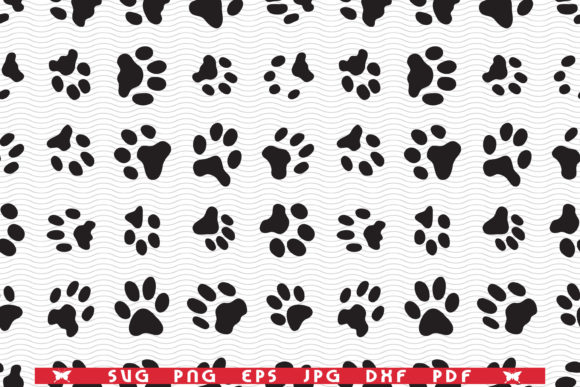
When I opened the Dogs Cats Footprint, Seamless Pattern, what struck me first wasn’t cuteness—it was clarity. Black silhouettes of dog and cat paws repeat with gentle rhythm, no overlapping, no visual clutter. It feels like a whisper rather than a shout: friendly but not cloying, playful but grounded. As an embroidery designer who’s stitched hundreds of pet-themed pieces for Etsy sellers and boutique clients, I appreciate how rare it is to find an icon-based pattern that avoids cartoonish overload while still reading instantly as “pet love.” This isn’t just a filler graphic—it’s a subtle storytelling tool.
Where It Shines in Real Embroidery Projects
Last week, I used Dogs Cats Footprint, Seamless Pattern on a natural linen tote bag for a local pet rescue’s fundraiser. We stitched it across the lower third in soft charcoal thread—no outline, no fill variation—just clean black-on-linen. The result? Calm, cohesive, and quietly meaningful. Customers kept commenting on how “thoughtful” it felt—not flashy, but unmistakably handmade. That’s the sweet spot: baby onesies (paired with a single paw near the hem), tea towels for a vet clinic’s gift shop, or pillow covers for a cozy nursery. It works especially well for small business owners who want design assets that support brand voice without demanding attention.
For sweatshirt embroidery, the seamless repeat lets you scale it confidently across the back or wrap it subtly around a cuff. On structured caps, I’d place it low on the side panel—small enough to avoid distortion on curved surfaces, yet legible at arm’s length. And because it’s built from solid silhouettes—not fine linework or tiny details—it holds up beautifully on textured fabrics like terry cloth, fleece, or even lightweight denim.
Where to Pause—and Test First
This isn’t a one-size-fits-all embroidery file. Its strength lies in simplicity, so don’t force it into roles it wasn’t designed for. Avoid using Dogs Cats Footprint, Seamless Pattern on ultra-small hoops (under 3 inches) where the repeat may feel cramped or lose its flow. On stretchy knits—like baby bodysuits or performance tees—stabilizer choice is non-negotiable: use cutaway + tear-away combo, and test stitch density before committing. Thin fabrics (voile, rayon challis) need extra backing; otherwise, those black paw shapes can ghost through or look brittle.
Dark fabric is where this design truly earns its keep—but only if your thread color contrast is intentional. A matte black thread on navy canvas reads rich and intentional; glossy polyester on black cotton can flatten the shape. Always run a black-and-white mockup first. And remember: seamless doesn’t mean invisible. If you’re layering it over another embroidered motif (say, a name or monogram), give it breathing room—don’t crowd the edges.
What It Adds to Your Finished Product—Beyond Aesthetics
As a reviewer who’s helped dozens of craft businesses refine their product photography and customer messaging, I’ll say this plainly: Dogs Cats Footprint, Seamless Pattern elevates perceived value without raising production complexity. It signals care—not just in stitching, but in curation. Buyers notice when a design feels *intentional*, not decorative. That quiet cohesion builds trust, especially for personalized gifts and holiday embroidery where emotional resonance matters more than flash.
For Etsy sellers, it’s a smart inventory multiplier: same digital embroidery file, five different applications—tote, apron, patch, kitchen towel, baby blanket—each feeling distinct because of placement and fabric choice. No rebranding needed. For commercial embroidery shops, it’s a reliable go-to when clients ask for “something pet-related but not cheesy.” And for hobbyists building confidence, it’s forgiving: minor alignment hiccups vanish in the repeat, and satin stitch or fill stitch both work cleanly.
Practical Notes Every Embroiderer Should Check
- Test on scrap fabric first—especially if stitching on textured or dark material.
- Confirm stitch density before scaling up; dense fills can stiffen lightweight fabrics.
- Review hoop size compatibility; seamless patterns can push boundaries on smaller machines.
- Inspect small details at actual stitch size—those paw pads should read clearly, not blur.
- Compare light/dark fabric backgrounds in printable mockups before listing.
- Use proper stabilizer: medium-weight cutaway for knits, tear-away for stable wovens.
- Verify licensing terms before selling finished items or bundling as design assets.
- Check thread color contrast—not just for visibility, but for warmth and tone.
Final Thought: A Quiet Workhorse, Not a Showstopper
Dogs Cats Footprint, Seamless Pattern won’t dominate your portfolio page—and it shouldn’t. It’s the kind of machine embroidery design that does its job so smoothly, your customer barely notices it’s there… until they reach for that tote bag every morning, or fold that tea towel with a smile. It’s proof that icons and graphics don’t need to shout to be memorable. For embroidery designers, craft business owners, and makers who value thoughtful repetition over frantic novelty, this is a reliable, repeatable, and quietly professional asset. Just remember: let it breathe, test it honestly, and trust its restraint.