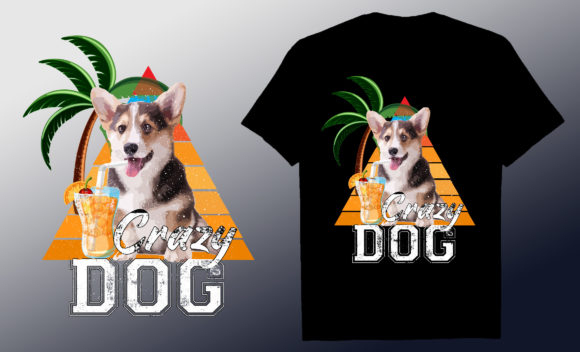
Crazy: A Dog Design That Demands Attention—And Thoughtful Execution
As someone who’s stitched thousands of designs across apparel, home goods, and boutique merchandise, I opened Crazy expecting playful energy—and got it instantly. But what stood out wasn’t just the charm; it was how clearly this dog-themed graphic leans into boldness without sacrificing versatility. It’s not a timid silhouette or a watered-down doodle. It’s expressive, slightly irreverent, and built for impact—on fabric, not just screen.
First Impressions: Personality Before Precision
The moment you view Crazy in vector form—EPS, SVG, PNG—you notice its confident shape language: exaggerated ears, a tilted head, a tongue that curls with intention. It’s stylized, not photorealistic, which is smart for embroidery. There’s no fine fur detail to drown in fill stitch, no fragile limbs that’ll vanish under thread tension. Instead, it relies on clean outlines and intentional negative space—qualities that translate well into satin stitch borders and balanced fill areas.
This isn’t a design that whispers. It grins. And that matters when you’re stitching for real-world use—like the custom embroidered tote bag I recently made for a local pet rescue’s fundraiser. We chose Crazy because it held up at 6 inches wide on canvas, read clearly from across a crowded craft fair table, and gave volunteers something joyful to talk about while handing out swag.
Where Crazy Shines (and Where It Needs Guardrails)
Crazy works exceptionally well on medium-to-heavyweight fabrics where stitch definition stays crisp: cotton twill aprons, fleece-lined sweatshirts, linen pillow covers, and structured tote bags. Its moderate detail level avoids overloading small hoop sizes—though I’d still recommend testing it at your smallest usable hoop (say, 4” x 4”) before committing to baby onesies or cap fronts.
On stretchy knits like t-shirts or lightweight jersey, stabilize aggressively—cutaway plus tear-away works best. The design’s open shapes and curved lines can ripple if the fabric shifts mid-stitch, especially around the ears and snout. On dark fabric? Absolutely test thread contrast. CMYK colors look rich on screen, but embroidery thread isn’t CMYK—it’s physical, reflective, and affected by fabric tone. A vibrant red in the file might mute on navy unless you choose a high-sheen polyester thread.
I’ve used Crazy on tea towels and nursery pillows, and each time, I adjusted stitch density slightly—reducing fill density by 10–15% on absorbent cotton towels to prevent puckering, and adding a light underlay on the pillow’s woven blend to anchor those smooth satin edges. It’s not finicky—but it rewards attention.
Real-World Fit: Beyond the T-Shirt Promise
The product description calls it a “dog T-Shirt Design”—and yes, it wears well there. But Crazy’s strength lies beyond basic apparel. Think embroidered patches for scout groups or dog-walking collectives. Think heat-transfer vinyl mockups for Etsy sellers previewing custom hoodies. Think printable mockups for small shop owners building cohesive branding—where Crazy becomes part of a visual language alongside paw prints, bones, and handwritten tags.
It also bridges personal and commercial use thoughtfully. As a handmade product, it feels warm and intentional—not mass-produced. As a digital embroidery file sold to other makers, it’s scalable, format-flexible, and theme-specific enough to stand out in a sea of generic pups. For holiday embroidery? Pair it with simple “Happy Howl-idays” lettering on flannel blankets. For wedding gifts? Stitch it onto linen cocktail napkins for the dog-loving couple.
What to Check Before You Stitch
- Test on scrap first—especially if using textured fabric like burlap or looped terry. Those curves need room to breathe.
- Review small details: the tip of the tongue, inner ear contours, and any subtle line work. If they disappear in your test, simplify or enlarge slightly.
- Confirm licensing before selling finished items or bundling Crazy into digital embroidery packs. Since it’s listed as a Graphics asset in the Print Templates category, verify usage rights for commercial resale.
- Try black-and-white mockups. Does the silhouette hold up without color? With Crazy, it does—which means it’ll translate cleanly to monochrome embroidery or single-thread accent work.
- Compare light vs. dark backgrounds in your design software. Some CMYK values flatten on black fabric; adjust brightness or switch to richer thread tones if needed.
Why This Design Builds Trust—Not Just Cuteness
Customers don’t buy “a dog graphic.” They buy confidence—in craftsmanship, in personality, in intention. When Crazy lands cleanly on a hand-stitched apron or a boutique sweatshirt, it signals care: the designer understood scale, fabric behavior, and viewer psychology. That builds trust faster than any tagline.
For Etsy sellers and craft fair vendors, that trust converts. People pause longer. They ask, “Is that your design?” They snap photos. They tag friends. That’s not magic—it’s a design calibrated for clarity, character, and context.
And for embroidery designers evaluating assets for their own library? Crazy earns its place not because it’s trendy, but because it’s usable. It doesn’t demand perfect conditions to succeed. It adapts—within reason—to baby embroidery, holiday embroidery, commercial embroidery, and even quick-turn personalized gifts. It’s got rhythm, not rigidity.
A Final Note for Makers
If you’re weighing Crazy for your next project—whether it’s a batch of embroidered kitchen towels for your small shop or a one-off gift for your neighbor’s new puppy—go ahead and download it. Then do what every experienced embroiderer does: slow down. Zoom in. Print a paper template. Hoop a scrap. Run one test. Let the design speak through thread, not just pixels.
Because great embroidery isn’t about flawless files. It’s about knowing when a design like Crazy will leap off the fabric—and when it needs your quiet, practiced hand to help it land just right.